The short version. Nagpur's summer is the defining design challenge: May averages a daily high of 43.1 °C at the city's IMD observatory1, and April evenings are very dry1. The monsoon is heavy too, bringing 999.2 mm between June and September1. Homes are larger than in most Maharashtra cities, so zoning, shading and storage matter as much as finishes.
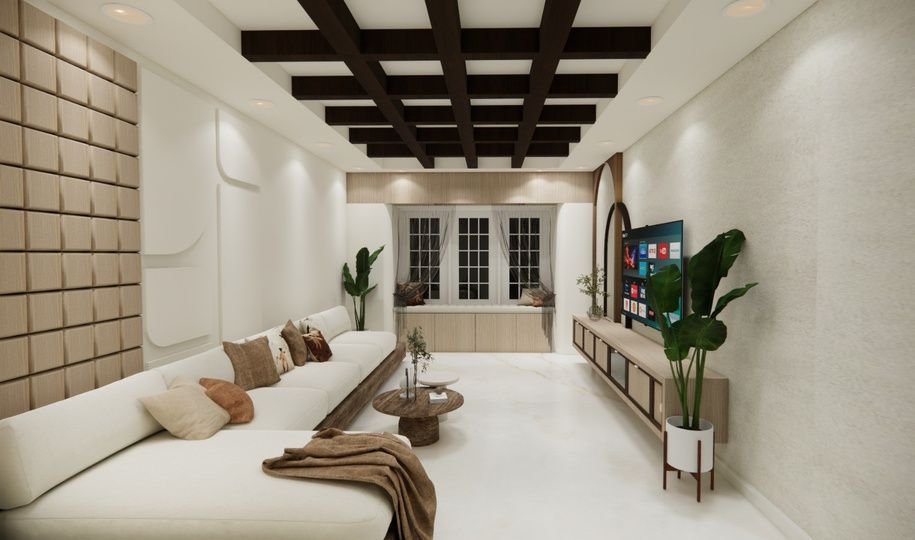
Nagpur's homes are larger than most
Nagpur Municipal Corporation counted 2,405,665 residents in the 2011 Census2, in 506,353 households3. The Census counts living rooms, bedrooms, dining and study rooms as dwelling rooms, and excludes kitchens, bathrooms and store rooms4.
| Dwelling rooms per household | Share of Nagpur households |
|---|---|
| One room, or no exclusive room3 | 25.9% |
| Two rooms3 | 29.8% |
| Three or more rooms3 | 44.4% |
That is a very different picture from Mumbai or Pune. Nearly half of Nagpur's households had three or more rooms3, roughly a 2BHK or larger, and three in four owned their home3. Only 22.5% rented3.
Larger, owner-occupied homes change the brief. There is room for a proper dining area, a pooja room, a study or a guest room, and the main risk shifts from cramming storage in to keeping a big home organised, cool and easy to clean.
Designing for Nagpur's summer heat
The India Meteorological Department's 1991–2020 normals for Nagpur's observatory show how intense the hot season is1.
| Season | What the IMD data shows | What it means for interiors |
|---|---|---|
| Hot season1 | May averages a daily high of 43.1 °C; April evenings average 23% humidity | Heat gain through west and south windows; wood shrinks and joints open; dust settles everywhere |
| Monsoon1 | 999.2 mm from June to September, about 87% of the year's rain; morning humidity of 84% in July and 86% in August | Moisture-resistant boards in wet areas; ventilated storage |
| Winter1 | December nights average 12.8 °C | Good window for polishing, painting and wallpaper |
Block the sun before it enters. External shading such as chajjas, pergolas or awnings works far better than anything inside. Inside, use blackout or thermal-lined curtains, or blinds with a reflective backing, on west- and south-facing windows.
Choose cool surfaces. Light-coloured walls and ceilings reflect heat. Stone or vitrified tile floors stay cooler underfoot than wood or carpet in summer.
Insulate the top floor. If you live directly under a roof terrace, ask about roof insulation or a reflective coating. It can make the top-floor rooms far more comfortable.
Plan for air conditioning properly. Decide where indoor and outdoor units go before the false ceiling and wardrobes are designed, run copper piping and drainage in concealed channels, and make sure the electrical supply can handle several units at once.
Keep dust out. Closed storage, glass-fronted display units instead of open shelves, and well-sealed windows reduce daily cleaning.
Larger homes and independent houses
With so many households in homes of three rooms or more3, Nagpur projects often include rooms that smaller cities rarely see.
Zone the house. Separate the quiet bedroom areas from the living, dining and kitchen zone. In an independent house, think about which rooms get afternoon sun and use them for storage, utility or bathrooms rather than bedrooms.
Plan central storage. A utility or store room for bulky items, such as suitcases, festival decorations and extra bedding, keeps bedrooms uncluttered and avoids building lofts in every room.
Give the dining area its own identity. A larger home can take a full dining table with a sideboard or crockery unit. Hang a pendant light over the table and place the switch near the kitchen door.
Design a pooja room that breathes. If you burn lamps or incense, include ventilation, a heat-resistant backing and an easy-clean floor.
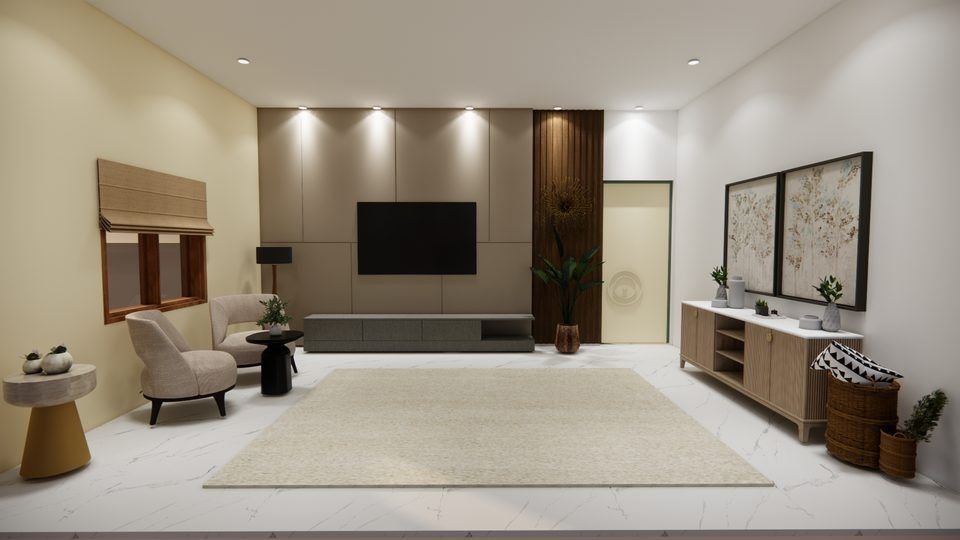
In independent houses, do civil work first. Terrace waterproofing, external wall repairs and plumbing upgrades should be finished before the monsoon and before interiors start.
If you are also considering homes elsewhere in Vidarbha, our guide to interiors for Chandrapur's hot summers covers a city with a similar climate and even heavier rain.
Materials that cope with heat, dryness and rain
Nagpur's furniture faces both a very dry hot season and a humid monsoon. Materials need to handle the swing.
- Engineered boards for large panels. Good plywood or high-density moisture-resistant board moves less than solid wood when humidity changes.
- Moisture-resistant grades in wet areas. Use a boiling-water-resistant or boiling-water-proof plywood under the sink and in bathrooms.
- Sealed surfaces everywhere. Seal the backs and undersides of panels as well as the visible faces, so they dry and absorb moisture evenly.
- Laminate or acrylic shutters. They resist heat, fading and frequent wiping better than untreated veneer.
- Fabrics that resist fading. Sunlight through west windows fades upholstery and curtains quickly. Choose fade-resistant fabrics, or use sheers behind main curtains.
- Let materials acclimatise. Store boards on site for a few days before cutting, especially in the hot season.
Budgets and quotes in Nagpur
Nagpur district had a per capita income of ₹3,22,927 in 2023-24, fourth among Maharashtra's district figures5. With larger homes, the overall scope of a project tends to be bigger, so careful comparison matters even more.
Fix a per-room budget. Decide how much goes to the kitchen, each bedroom, the dining and living rooms, and any special rooms, before design meetings start.
Ask for itemised quotes on the same drawings. Each unit should list its size, board grade and brand, shutter finish, hardware brand and countertop.
Separate the civil and services work. Waterproofing, roof insulation, electrical upgrades for ACs and false ceilings should be their own lines.
Pay against progress. Booking, drawings, samples, delivery, installation and the snag list are natural milestones.
Agree a schedule that avoids the worst weather for site finishes, and get the warranty in writing.
Frequently asked questions
How do I keep a Nagpur home cool in May?
Shade windows from outside where possible, use thermal or blackout curtains on west and south windows, choose light wall colours and tile floors, and insulate the roof if you are on the top floor. May averages a daily high of 43.1 °C at the city's IMD observatory1.
Which materials survive Nagpur's dry summer?
Engineered boards with sealed edges, laminate or acrylic shutters and fade-resistant fabrics. Evening humidity in April averages just 23%1, which makes solid wood shrink.
Where should AC units be planned?
Before the false ceiling and wardrobes are designed. Fix the indoor and outdoor unit positions, conceal piping and drainage, and check the electrical capacity.
Which season suits painting in Nagpur?
The mild winter months, when the air is dry and stable. December nights average 12.8 °C1, and site finishes cure well.
How should I plan storage in a large house?
Use a central store or utility room for bulky items, full-height wardrobes in bedrooms and closed storage elsewhere to keep dust out.
Planning interiors for your Nagpur home?
2BHK Interiors takes on projects in Nagpur, from apartments to independent houses. Share your floor plan and budget, and we will talk you through a layout that stays cool and easy to clean.
Talk to 2BHK InteriorsNearby city guides
How we researched this page
We checked every figure on this page against the sources below on the dates shown (Census of India, Census of India (houselisting), Census of India (definitions), Economic Survey of Maharashtra, IMD climate normals). If you spot something out of date, tell us and we will correct it.
- India Meteorological Department: Climatological Tables of Observatories in India 1991–2020 (9th edition, 2022) (accessed 2026-11-07)
- Census of India: Census 2011 Table A-4: Towns and Urban Agglomerations by population size class (accessed 2026-11-07)
- Census of India: Census 2011 Table HH-4 (HL-04): Households by ownership status, size of household and number of dwelling rooms, Maharashtra (accessed 2026-11-07)
- Office of the Registrar General & Census Commissioner, India: Census of India 2011: Instruction Manual for Houselisting and Housing Census (accessed 2026-11-07)
- Government of Maharashtra (Economic Survey 2024-25), via OpenCity: District-wise GDP and Per-Capita Income Data 2023-24 (Economic Survey of Maharashtra 2024-25) (accessed 2026-11-07)