The short version. Most Mumbai households live in very little space: in the 2011 Census, about two in three had one dwelling room or none of their own1. Almost all of the city's rain arrives between June and September2, and the air stays humid even in the driest month2. Plan for storage first, specify moisture-resistant materials for the whole flat rather than just the kitchen, and get your housing society's rules in writing before any work starts.
What Mumbai's homes look like on paper
Greater Mumbai counted 12,442,373 residents in the 2011 Census3, living in 2,665,481 households1. The more useful number for interiors is how many rooms those households have. The Census counts living rooms, bedrooms, dining and study rooms, but not kitchens, bathrooms, store rooms or passages4. On that definition, a room-and-kitchen flat counts as one room, a 1BHK as two and a 2BHK as three.
| Dwelling rooms per household (Census) | Share of Mumbai households |
|---|---|
| One room, or no exclusive room1 | 64.9% |
| Two rooms1 | 20.8% |
| Three or more rooms1 | 14.2% |
These figures are more than a decade old and the city has built a great deal since, so treat them as a picture of the existing housing stock rather than of new launches. They still explain why Mumbai interiors are mostly about fitting a family's life into one or two rooms: beds that store, tables that fold, and wardrobes that reach the ceiling. Most households owned the home they lived in1, which also means many projects are renovations of flats that have been lived in for years, not fit-outs of empty shells.
Designing for a monsoon that brings almost all of the year's rain
The India Meteorological Department's 1991–2020 normals for the Santacruz observatory show 2,502.3 mm of rain a year over about 79 rainy days2. What makes Mumbai unusual is how concentrated that rain is.
| Period | What the IMD data shows | What it means for interiors |
|---|---|---|
| June to September2 | 2,390.5 mm, about 96% of the annual total; July alone brings 919.9 mm; morning humidity of 86% in July and August | Seepage through external walls, swelling of untreated boards, mould behind wardrobes |
| October and November2 | November has the highest average daily maximum, 34.1 °C | The muggy post-monsoon weeks are when ACs and ceiling fans matter most |
| January and February2 | January nights average 16.9 °C; even February evenings average 47% humidity | The mildest, driest window for polishing, painting and wallpaper |
Use moisture-resistant boards everywhere, not just near water. In a city where the air stays damp for months, a wardrobe on an external wall faces the same risk as a sink cabinet. Specify a boiling-water-resistant or boiling-water-proof plywood grade, and ask for the brand and grade in writing.
Fix seepage before you build anything. Look for damp patches, flaking paint or white salt marks on external walls and around windows. Waterproofing, re-sealing window frames and repairing cracks should come before the carpenter. A new wardrobe fixed against a wet wall will be damaged within one season.
Choose hardware that resists corrosion. Stainless steel or properly coated hinges, channels and handles last longer in humid, salty air than cheaper plated fittings.
Leave room for air. A small gap behind wardrobes, ventilated shoe racks and a proper exhaust fan in the kitchen and bathroom do more against mould than any premium finish.
Getting more from a small Mumbai flat
When most of the home is one or two rooms1, every piece of furniture has to do two jobs. A few approaches work in almost every compact flat:
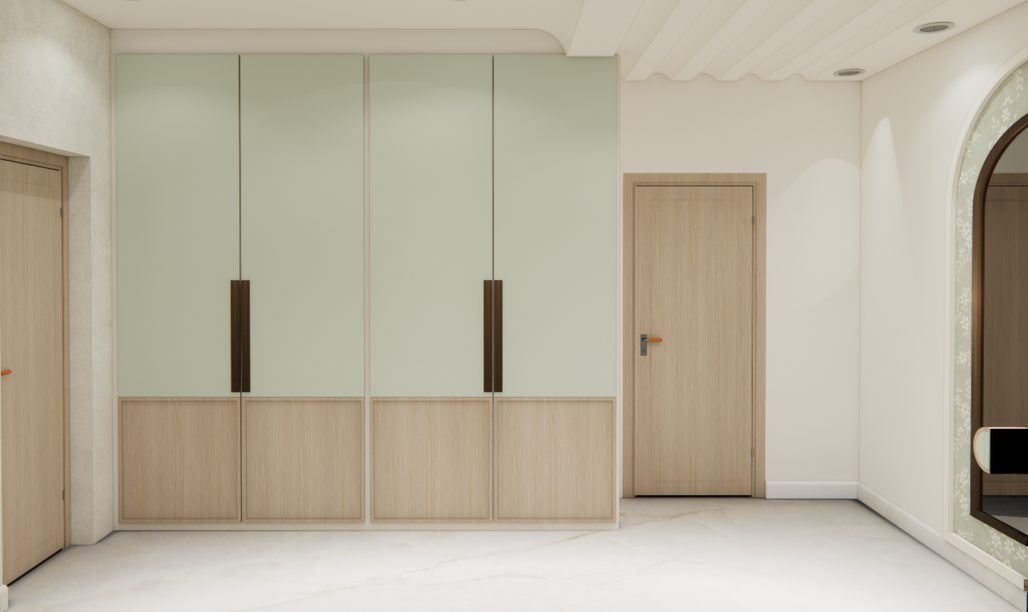
- Go to the ceiling. Full-height wardrobes and lofts above doors and passages turn dead wall space into storage for suitcases and seasonal clothes. Keep the top section for things you use rarely.
- Store under the bed. A hydraulic or box storage bed can hold bedding, luggage and documents, freeing up a whole wardrobe section.
- Make the living room convert. A sofa-cum-bed, a fold-down dining table and nesting stools let one room work as a living room by day and a guest room at night.
- Use the window. A built-in window seat with drawers below adds seating and storage without blocking circulation.
- Keep the floor clear. Wall-mounted TV units, floating shelves and a wall-hung desk make a small room feel larger because more of the floor is visible.
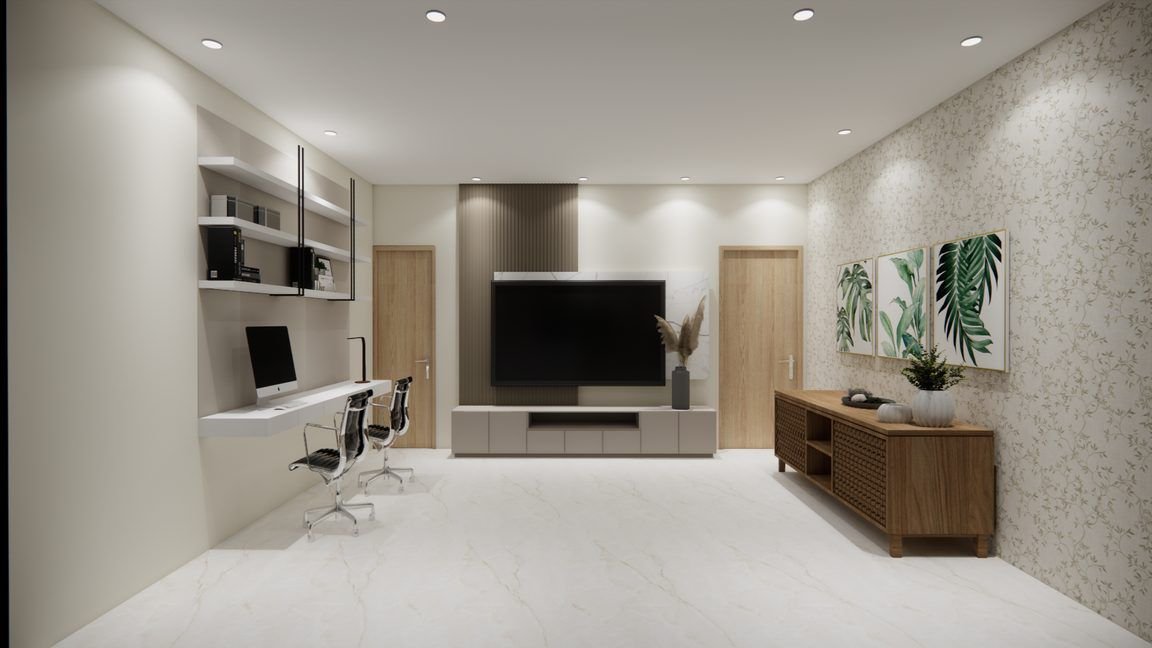
Light colours, mirrors placed to bounce daylight, and one consistent flooring through the flat also help a small home feel calmer. If you are comparing Mumbai with the satellite cities, our guide to planning a family flat in Thane covers homes that are, on average, a little larger.
Working in an older or redeveloped building
Much of Mumbai's interior work happens in occupied buildings, which brings rules and constraints you won't find in a new suburb.
Get the society's permissions first. Most housing societies set working hours, require a written application and sometimes a deposit, restrict lift use for materials, and specify how debris must be removed. Some insist that structural or plumbing changes be approved by the society's engineer. Ask for the rules in writing and share them with your designer before the schedule is fixed.
Check the wiring and plumbing before you hide them. In older flats, the electrical wiring, distribution board and concealed plumbing may not cope with modern loads such as several ACs, a microwave and a geyser running together. Rewiring is far cheaper before the false ceiling and wardrobes go in.
Protect the neighbours, and yourself. Ask how dust, noise and water will be controlled during the work. Agree that common corridors will be covered and cleaned daily.
In a redeveloped flat, read the handover documents. New buildings often come with a builder's kitchen platform, fixed electrical points and flooring. Decide early what you will keep. Reusing a sound granite platform and decent tiles frees budget for storage and lighting.
Budgets and quotes for a Mumbai project
Mumbai's combined districts had the highest average income in the state: a per capita net district domestic product of ₹4,55,767 in 2023-245. That does not tell you what your project will cost, because cost depends far more on scope and materials than on the city. What it does mean is that you will meet suppliers at every price point, from local carpenters to full-service studios, so a clear brief matters.
Ask for an itemised quote. Every unit should list its size, board grade and brand, shutter finish, hardware brand and countertop. A single lump sum or per-square-foot figure with no detail cannot be compared with anything.
Separate civil work from furniture. Waterproofing, rewiring, plumbing changes and false ceilings should be priced as their own lines, so you can see what the furniture really costs.
Tie payments to stages you can check. Signed drawings, approved material samples, delivery to site, installation and a closed snag list are natural milestones. Keep the booking amount modest and hold back a final share until the snags are fixed.
Agree a dated schedule. In Mumbai, ask specifically how the schedule handles the June to September rains2 and the society's working hours.
Frequently asked questions
Which time of year suits interior work in Mumbai?
The drier winter months suit painting, polishing and wallpaper best, because almost all of the year's rain falls between June and September2. Factory-made modular furniture can be installed in any season, but site finishes dry much more slowly during the monsoon.
Which plywood should I use in a Mumbai flat?
Use a boiling-water-resistant or boiling-water-proof grade for the kitchen, bathrooms and any wardrobe on an external wall, and seal every exposed edge. Ask for the exact grade and brand on the quote.
How do I add storage to a one-room home?
Use the full wall height with lofts, choose a storage bed, add a window seat with drawers and keep furniture wall-mounted where possible. In 2011, most Mumbai households had one room or none of their own1, so these ideas are tried and tested.
Do I need my society's permission for interior work?
Usually yes, at least for working hours, lift use and debris removal, and often for structural or plumbing changes. Get the rules in writing before you fix the schedule.
Why does mould appear behind my wardrobe after the monsoon?
External walls absorb moisture during the rains, and a wardrobe fixed flat against them traps that damp. Fix any seepage first, leave a small air gap behind the unit and use a moisture-resistant board with a laminated back panel.
Planning interiors for your Mumbai flat?
2BHK Interiors takes on projects in Mumbai. Share your floor plan and budget, and we will suggest a layout that gets the most storage out of every wall before you commit to anything.
Talk to 2BHK InteriorsNearby city guides
How we researched this page
We checked every figure on this page against the sources below on the dates shown (Census of India, Census of India (houselisting), Census of India (definitions), Economic Survey of Maharashtra, IMD climate normals). If you spot something out of date, tell us and we will correct it.
- Census of India: Census 2011 Table HH-4 (HL-04): Households by ownership status, size of household and number of dwelling rooms, Maharashtra (accessed 2026-11-07)
- India Meteorological Department: Climatological Tables of Observatories in India 1991–2020 (9th edition, 2022) (accessed 2026-11-07)
- Census of India: Census 2011 Table A-4: Towns and Urban Agglomerations by population size class (accessed 2026-11-07)
- Office of the Registrar General & Census Commissioner, India: Census of India 2011: Instruction Manual for Houselisting and Housing Census (accessed 2026-11-07)
- Government of Maharashtra (Economic Survey 2024-25), via OpenCity: District-wise GDP and Per-Capita Income Data 2023-24 (Economic Survey of Maharashtra 2024-25) (accessed 2026-11-07)