The short version. Nearly four in five Amravati homes are owner-occupied: 79.3% of households owned their home in the 2011 Census1, and only 18.3% rented1. May averages a daily high of 41.6 °C at the city's IMD observatory2, and July is the wettest month2. When a family expects to live with its furniture for decades, spending on durability pays off.
Amravati's homes and households
Amravati Municipal Corporation had 647,057 residents in the 2011 Census3, in 133,562 households1. The Census defines dwelling rooms as living rooms, bedrooms, dining, drawing and study rooms, leaving out kitchens, bathrooms, store rooms and verandahs4.
| Dwelling rooms per household | Share of Amravati households |
|---|---|
| One room, or no exclusive room1 | 32.9% |
| Two rooms1 | 29.1% |
| Three or more rooms1 | 38.0% |
The largest group had three or more rooms1, and about a third had one room or none of their own1. Nearly four in five households were owner-occupiers1.
When most people own the home they live in, interiors become a long-term decision. Furniture is expected to serve a growing family, then older parents, and to survive many seasons of heat and rain. That changes what is worth paying for: better boards, branded hardware and layouts that can adapt, rather than finishes that look striking for a year or two.
Hot Mays and a July monsoon
The India Meteorological Department's 1991–2020 normals for Amravati's observatory show 763.1 mm of rain a year over about 41 rainy days2.
| Season | What the IMD data shows | What it means for interiors |
|---|---|---|
| Hot season2 | May averages a daily high of 41.6 °C; May evenings average 31% humidity | Heat through west windows, fading fabrics, shrinking wood |
| Monsoon2 | 661.1 mm from June to September, about 87% of the year's rain; July is the wettest month at 205.6 mm; morning humidity of 85% in July and 88% in August | Swelling boards near water; musty closed cupboards |
| Winter2 | December nights average 14.1 °C | Mild, dry weather for painting and polishing |
Nearly nine-tenths of the year's rain falls in four months2, with very humid mornings in August2, after a hot, dry May2. Furniture has to handle both.
Fix seepage before joinery. Terrace waterproofing and outer wall repairs should be done before the monsoon and before wardrobes go on those walls.
Shade the afternoon side. Thermal-lined curtains or reflective blinds on west and south windows make a real difference in May.
Give cupboards airflow. A small gap behind outer-wall wardrobes and louvred shoe-rack shutters keep August damp from settling.
Designing a home to grow old in
With so many families staying put1, it is worth thinking ten or twenty years ahead.
Plan one ground-floor or step-free bedroom. An attached bathroom with grab rails, non-slip tiles and a wider door makes the home easier for older parents, or for anyone recovering from an injury.
Let rooms change job. A child's bedroom becomes a study, then a guest room. Wall-mounted desks and freestanding beds adapt more easily than built-in bunk units.
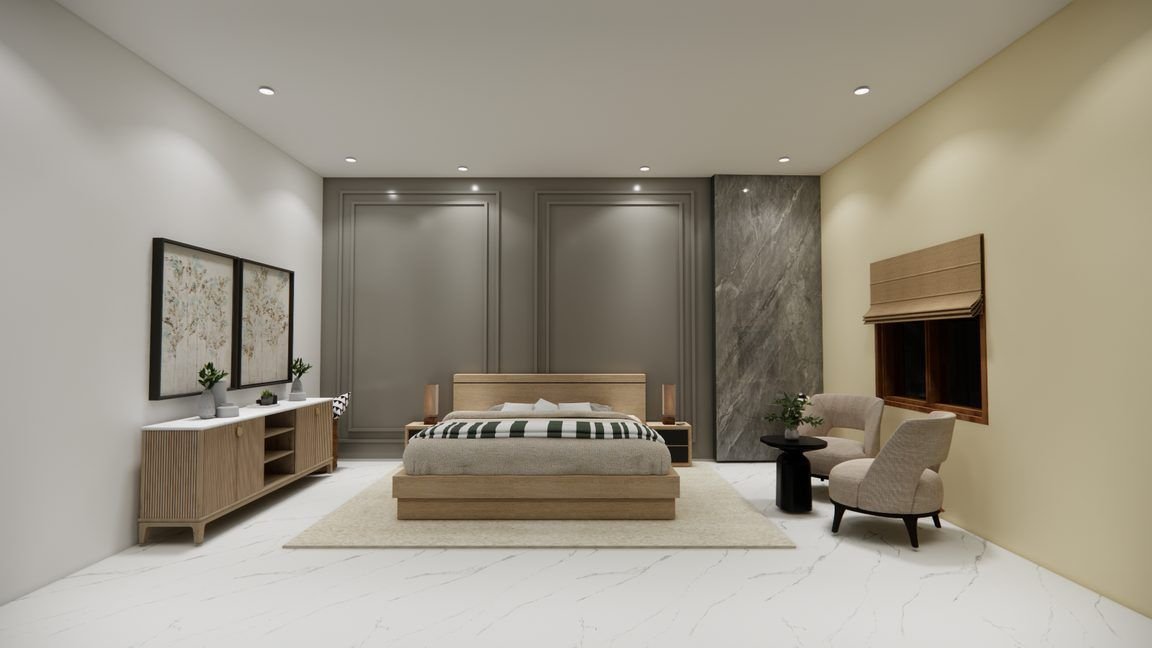
Make bedrooms comfortable to sit in. A lounge chair and side table by the window give a quiet corner that suits every age.
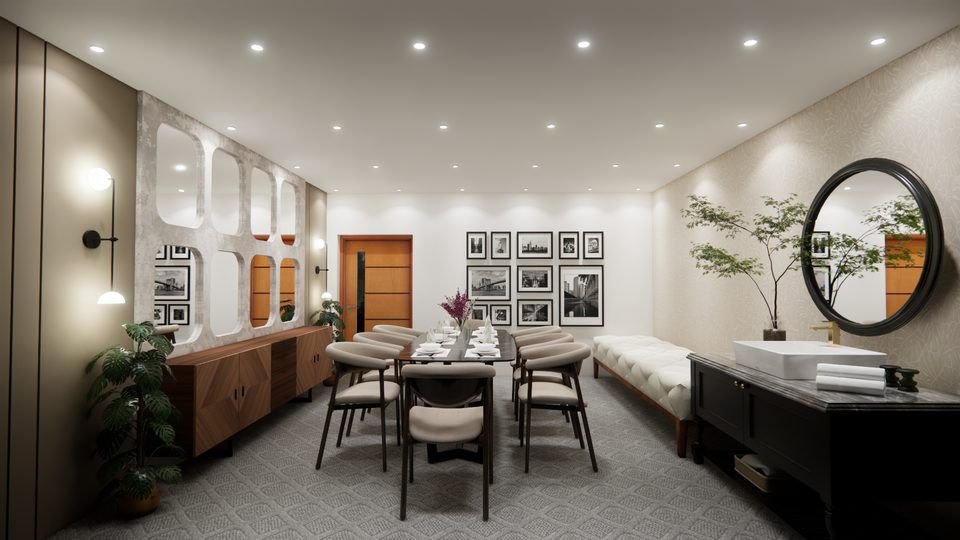
Put the dining room at the centre. A long table with a sideboard for crockery and festival utensils serves family meals for years.
Light for older eyes. Brighter task lights in the kitchen and bathroom, switches reachable from the bed and a night light in the passage help as the family ages.
If you are also comparing homes in a neighbouring city, our guide to coping with dry heat in Akola covers a city with an even drier spring.
Materials that last for decades
In a home that will be lived in for twenty years or more, the lowest-cost board or hinge rarely saves money overall. These are the places where spending a little more at the start tends to pay back.
- Branded plywood with a written warranty. A boiling-water-resistant or boiling-water-proof grade for kitchens, bathrooms and outer-wall wardrobes.
- Edge banding on every face. Sealed backs and undersides help boards survive the switch between dry May and humid August.
- Soft-close hinges and channels from a known brand. They outlast cheaper fittings through years of daily use.
- Quartz or granite countertops. Hard-wearing surfaces that handle heat and cleaning.
- Termite-treated boards and regular pest control. Long-owned homes, especially independent houses, need protecting year after year.
- Neutral, timeless finishes. Light wood, greys and whites date more slowly than bold trends.
Budgets and quotes in Amravati
Amravati district had a per capita income of ₹1,91,401 in 2023-24, 20th of the 34 district figures in Maharashtra's Economic Survey5. For a home you will live in for decades, quality per rupee matters more than the lowest quote.
Ask what each quote includes. Every line should name the unit size, board grade and brand, shutter finish, hardware brand and countertop.
Compare warranties, not only prices. A slightly higher quote with a longer written warranty on boards and hardware can cost less over the years.
Separate the civil work. Waterproofing, accessibility changes in bathrooms and electrical upgrades should be priced on their own.
Stage the payments. Booking, drawings, samples, delivery, installation and the closed snag list.
Keep a home file. Laminate codes, paint shades and hardware brands make repairs and additions simple years later.
Frequently asked questions
Is it worth paying more for better plywood?
For a home you plan to keep, usually yes. In 2011, 79.3% of Amravati households owned their home1, and furniture in a long-owned home has many monsoons to survive.
How do I keep rooms cool in May?
Shade west and south windows, use thermal-lined curtains, choose light walls and tile floors, and insulate the roof on the top floor. May averages a daily high of 41.6 °C2.
Why do cupboards smell musty in August?
Morning humidity averages 88% in August at Amravati's observatory2. Ventilated shutters and an air gap behind outer-wall wardrobes help.
How can I make my home suitable for elderly parents?
Plan a step-free bedroom with an attached bathroom, grab rails, non-slip flooring, good lighting and switches near the bed.
When should painting and polishing be done?
In the mild winter months. December nights average 14.1 °C2, and finishes cure well in that weather.
What should go in a home file?
Keep the laminate codes, paint shades, hardware brands, warranty cards and the final drawings together. Years later, they make it easy to match a replacement shutter or repaint one wall without guessing.
Planning interiors for your Amravati home?
2BHK Interiors takes on projects in Amravati. Share your floor plan and budget, and we will suggest layouts and materials built to last through many summers and monsoons.
Talk to 2BHK InteriorsNearby city guides
How we researched this page
We checked every figure on this page against the sources below on the dates shown (Census of India, Census of India (houselisting), Census of India (definitions), Economic Survey of Maharashtra, IMD climate normals). If you spot something out of date, tell us and we will correct it.
- Census of India: Census 2011 Table HH-4 (HL-04): Households by ownership status, size of household and number of dwelling rooms, Maharashtra (accessed 2026-11-07)
- India Meteorological Department: Climatological Tables of Observatories in India 1991–2020 (9th edition, 2022) (accessed 2026-11-07)
- Census of India: Census 2011 Table A-4: Towns and Urban Agglomerations by population size class (accessed 2026-11-07)
- Office of the Registrar General & Census Commissioner, India: Census of India 2011: Instruction Manual for Houselisting and Housing Census (accessed 2026-11-07)
- Government of Maharashtra (Economic Survey 2024-25), via OpenCity: District-wise GDP and Per-Capita Income Data 2023-24 (Economic Survey of Maharashtra 2024-25) (accessed 2026-11-07)